

01 — The Problem
Trapped in the Conference Room
In Spring 2021, Microsoft Teams was synonymous with one thing: Work. It was the utility belt of the corporate world — efficient, reliable, and decidedly un-fun.
The challenge? Convince the world that this same tool should host their family game nights, virtual birthday parties, and intimate connections. The tool that screamed Monday morning had to learn to say Saturday night.
The Core Insight
We couldn't compete with Zoom on "ease of video" alone. We needed a deeper hook. People didn't just want to talk at a screen — they wanted to do things together. The verb was wrong. The entire category was positioning on the wrong verb.
02 — The Pivot
Action + Together
This insight led to the Action + Together framework. We shifted the narrative from "calling" to "experiencing." The strategy wasn't about the fidelity of the video — it was about the utility of the shared environment.
We demonstrated that Teams wasn't just for meetings; it was for planning the family reunion, organizing the soccer league, and actually doing the work of life, together. Not watching each other. Doing things alongside each other.
The verb was wrong. Every competitor was fighting over "video call." We stepped out of that fight entirely and claimed a different word: together.
This repositioning required courage from stakeholders who had spent years building Teams as a workplace tool. The risk was real — alienating the core business user base in pursuit of an audience that didn't yet see Teams as relevant to their lives.
03 — Humanizing IT
Breaking the Corporate Blue
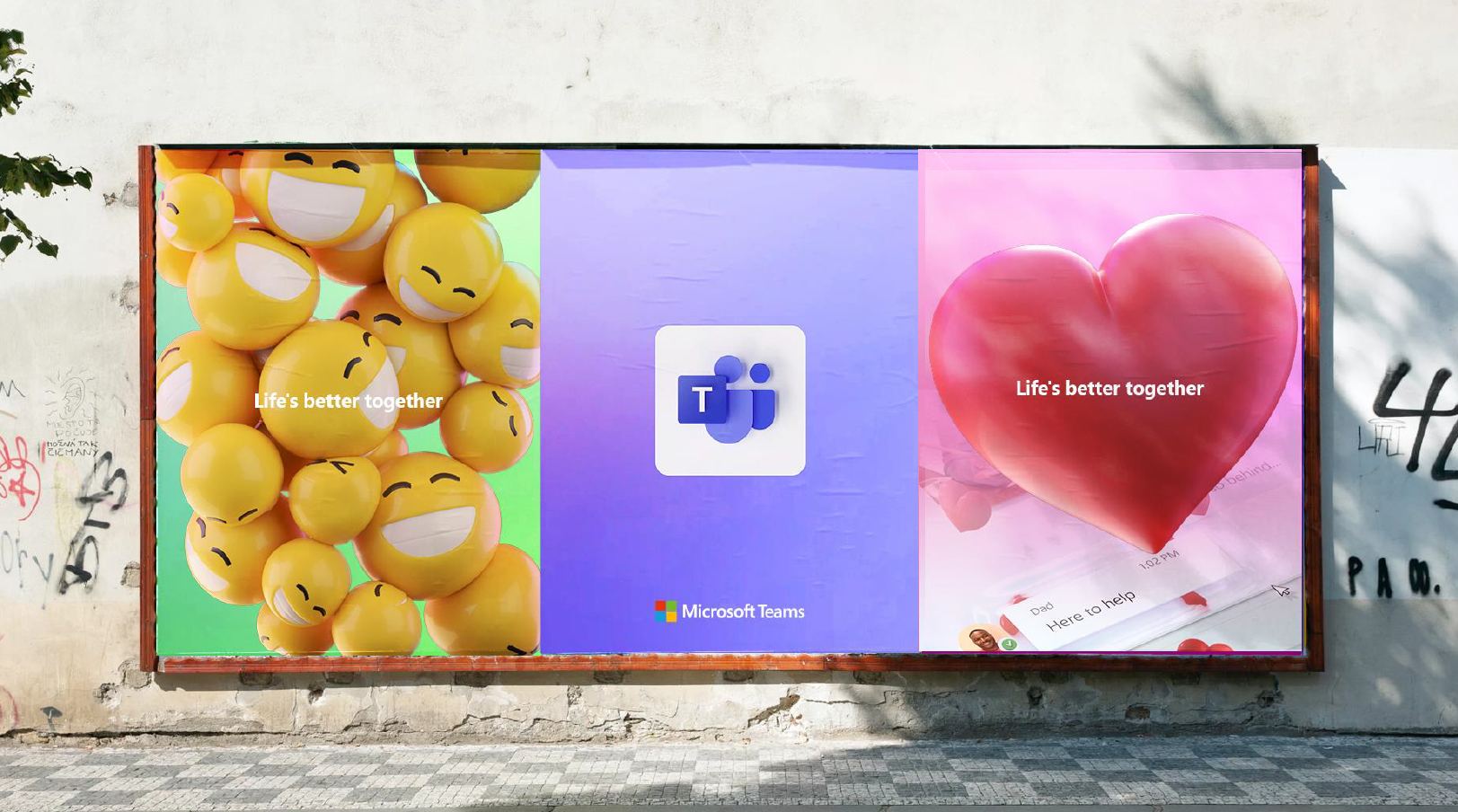
To break the "Corporate Blue" perception, we had to radically alter the visual language. We introduced a custom 3D emoji system: whimsical, tactile, and expressive.
This wasn't just decoration. It was a signal. It told users: it's okay to be silly here. This isn't just for spreadsheets. The emojis became permission structures — emotional cues that reframed what Teams was for.

A new visual language designed to signal a shift in purpose — from utility to warmth.
Every touchpoint — from App Store screenshots to social assets to the hero film — had to reinforce the same emotional truth. Teams wasn't changing what it was. It was revealing what it had always been capable of, with the right story wrapped around it.
04 — The Results
When Story Becomes Strategy
The launch was a watershed moment. By positioning "Enterprise Reliability" as a feature for families — the call that actually works when grandma joins — we turned our perceived weakness into our greatest strength.
The numbers validated the strategy. But the more lasting result was a proof of concept: even the most utilitarian tools can find a place in the heart of the home if the story is right and the creative execution has the courage to match the ambition.
We didn't rebuild Teams. We rebuilt the story around Teams — and the market responded to the story first.
This article reflects professional experience and strategic opinion from firsthand involvement in the launch. Sources are available on request for any externally referenced data. It draws primarily from real-world practice rather than universal rules.